Every year, school food service directors and kitchen managers face the annual scramble. New staff to onboard. Updated menus to roll out. Equipment to inspect. Budgets to stretch. The back-to-school season is exciting — but let’s be honest, it’s also stressful.
There are plenty of things in a school you can’t fully control. Kitchen safety doesn’t have to be one of them.
The Hidden Hazards of the School Kitchen
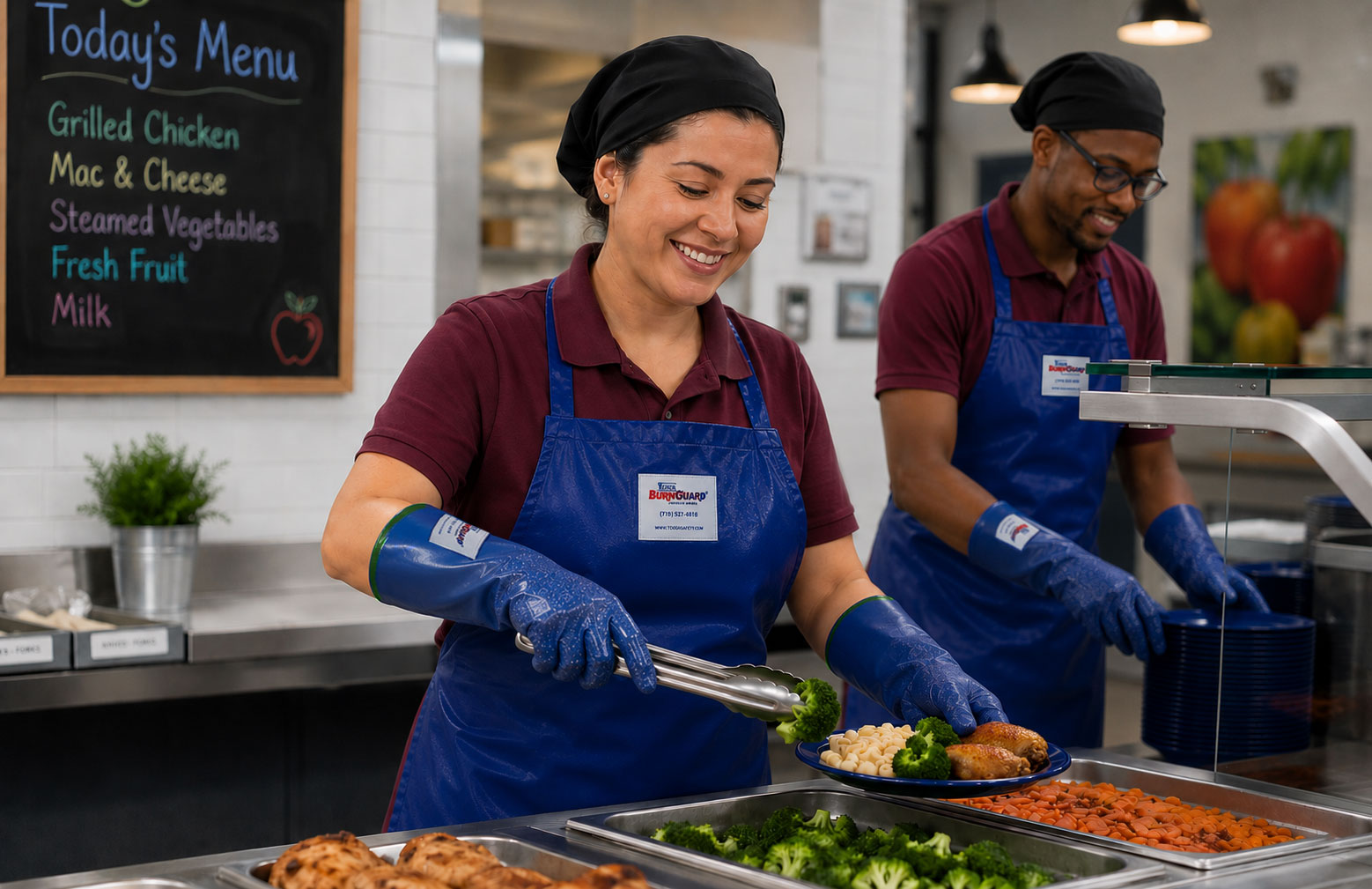
School kitchens are among the most demanding food service environments in the country. Think about what your team faces daily: industrial slicers running at full speed, commercial mandolines, high-heat sheet pans coming in and out of ovens, and the relentless pressure of feeding hungry students daily.
According to the Bureau of Labor Statistics, cuts and lacerations are among the most common injuries in food service — and hands bear the brunt. In a school setting, where staff may include part-time workers, seasonal hires, and employees with varying levels of experience, the risk only compounds.
A cut that sidelines a kitchen worker isn’t just a personal hardship. It means short-staffing during the busiest meal rushes of the year, potential liability for the district, and real human cost to someone who showed up just trying to do their job.
Not All Gloves Are Created Equal
Here’s a truth that experienced food service directors already know: the cheap glove is never actually cheap.
Gloves that wear out after a few weeks mean constant reordering, inconsistent protection levels as materials degrade, and staff who either work unprotected or work in gloves that have lost their structural integrity. That false economy costs districts more — in procurement time, in replacement costs, and most importantly, in preventable injuries.
Pro-grade gloves — the kind designed for high-volume, high-hazard professional kitchens — are engineered differently. The materials are denser and more durable. The cut resistance ratings are independently tested and certified. The heat protection is designed to hold up through repeated use, not just the first few weeks out of the package.
Why School Systems Are Choosing Tucker Safety Products
Tucker Safety Products has built its reputation in the most demanding professional kitchens in the country — and that same standard now serves school food service programs nationwide.
Longer-lasting performance. Tucker Safety gloves are engineered to maintain their protective properties over the extended lifespan of real kitchen use. That means fewer replacement cycles, less procurement hassle, and consistent protection from day one to the end of the glove’s life.
Better protection where it counts. Tucker Safety’s glove line covers the full spectrum of kitchen hazards — cut and puncture resistance for prep work, heat and flame resistance for oven and grill applications, and options designed specifically for wet or high-slip environments. Your staff gets the right glove for the right task.
A savings story that makes sense to administrators. When you present Tucker Safety to your district’s purchasing team, the math is on your side. Fewer injuries mean fewer workers’ compensation claims, less absenteeism, and reduced liability exposure. Longer glove life means lower per-use cost over time. Protection that holds up translates directly to budget dollars saved.
Making the Right Call Before the Bell Rings
Back-to-school season is exactly the right time to evaluate your PPE program. Before the rush hits, ask yourself:
- When were our current gloves last evaluated for cut resistance rating?
- Are we using the right glove for each station — prep, heat, wet work?
- What has our glove replacement frequency looked like over the past year?
- Have we had any hand injuries that better protection might have prevented?
If any of those questions give you pause, it’s worth a conversation with Tucker Safety.